PT Hub
A team platform I built and run for my Pro Tour testing team: one place for the decisions, meetings and money that a few weeks of shared preparation produce.
- Product
- Data pipeline
- Quantitative
- Automation
- Privacy
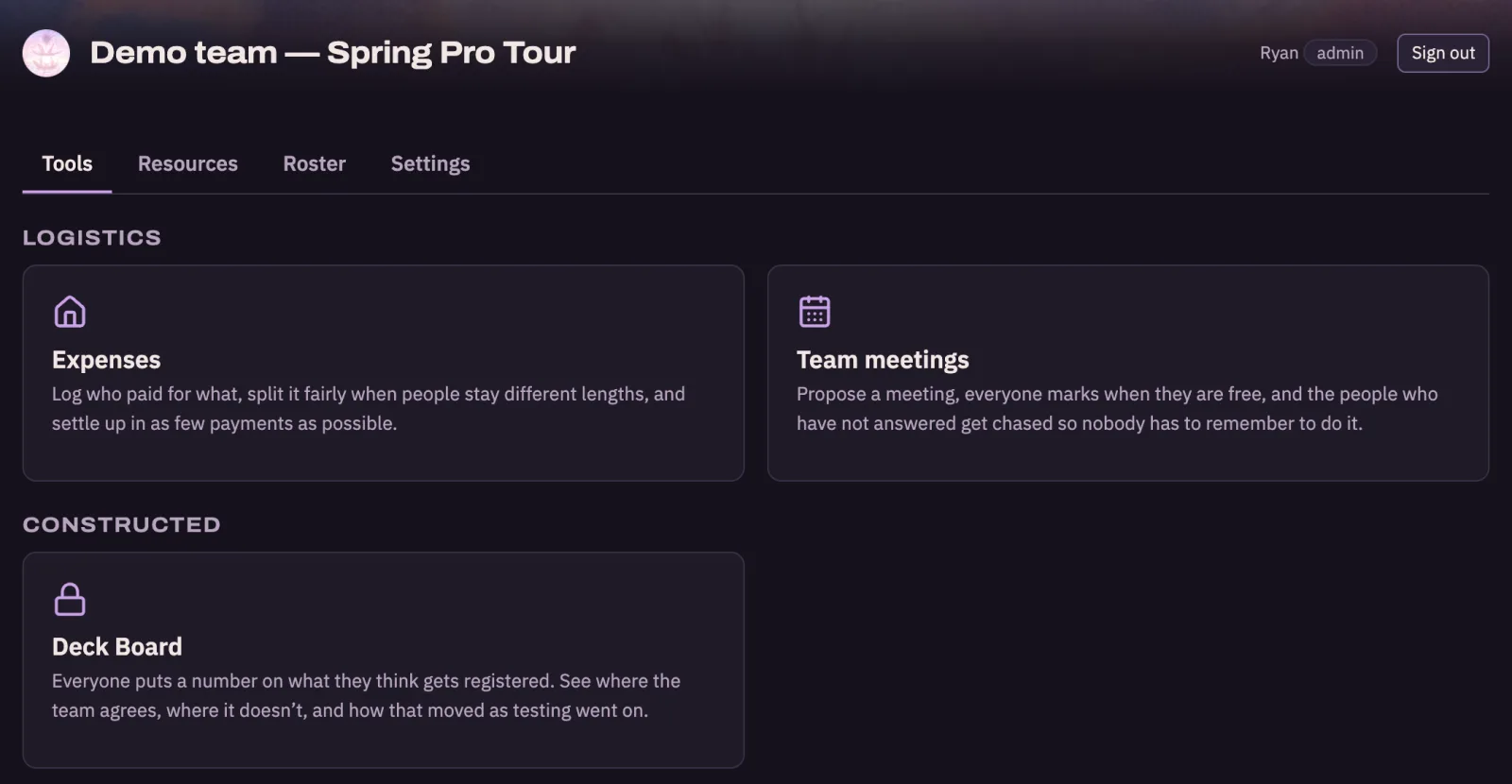
What it does
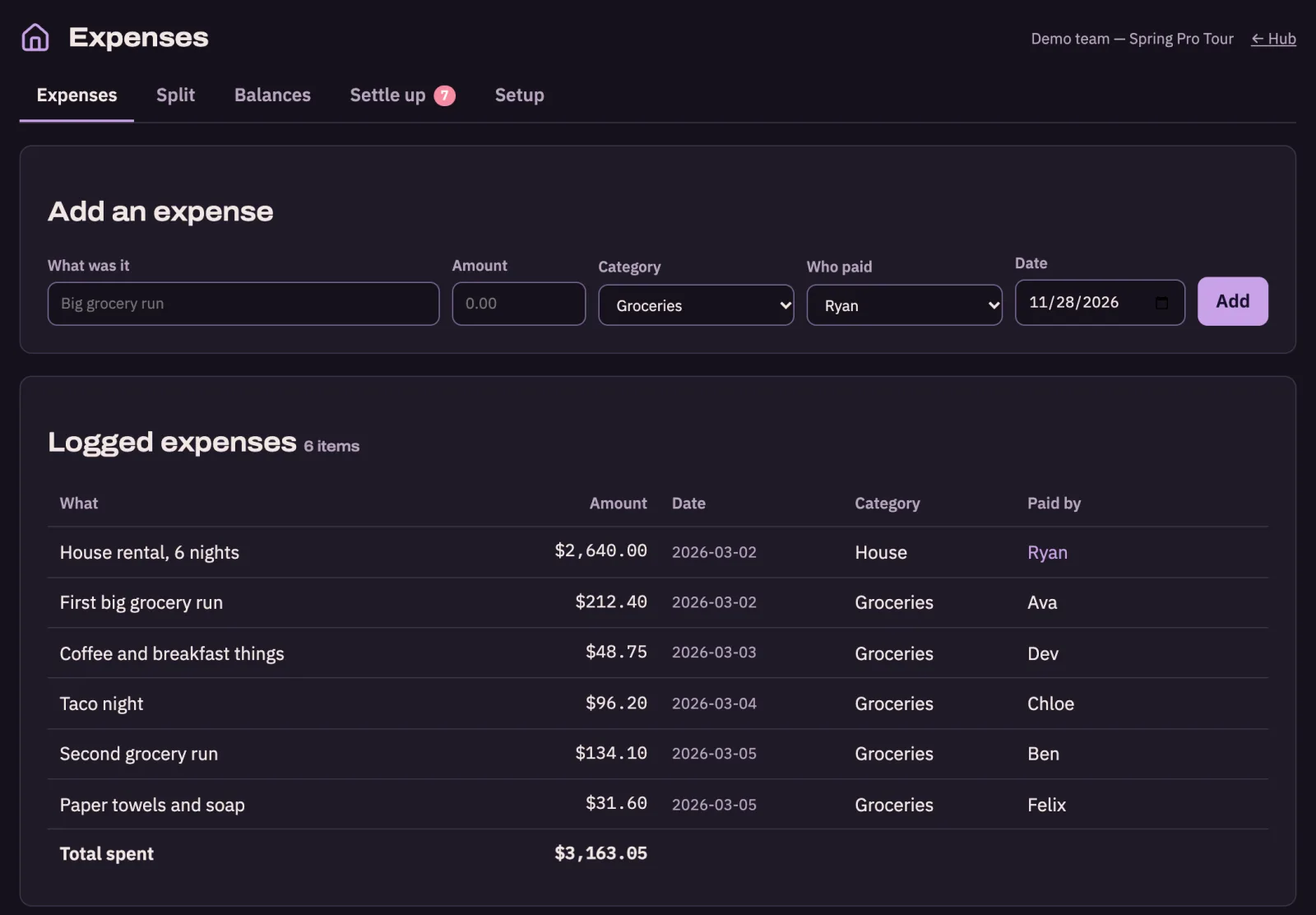
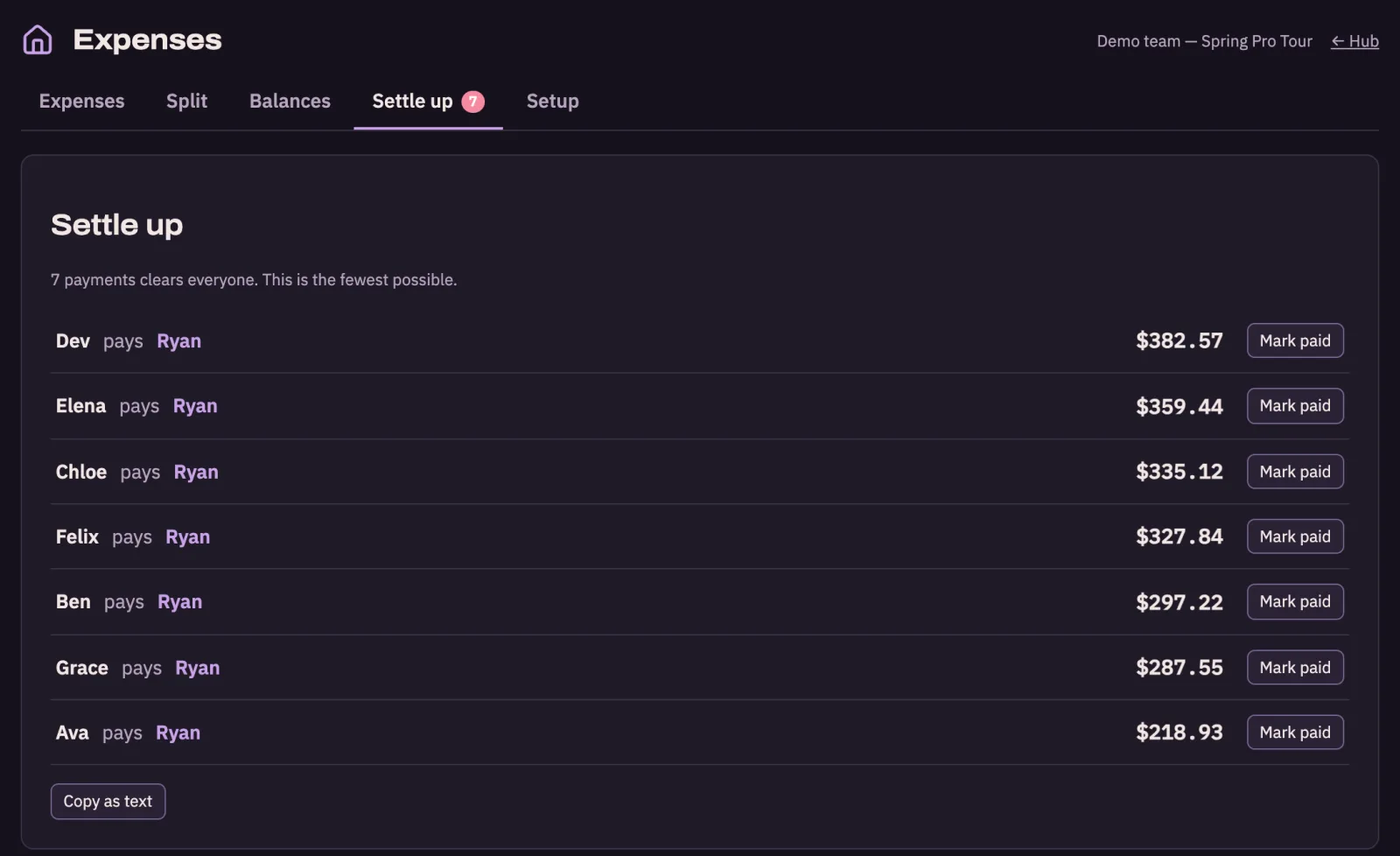
Splitting a shared house fairly
People stay different numbers of nights, so an even split is wrong. Anyone logs what they paid for; each person's share is weighted by the nights they stayed, and the tool works out the fewest payments that settle everyone.
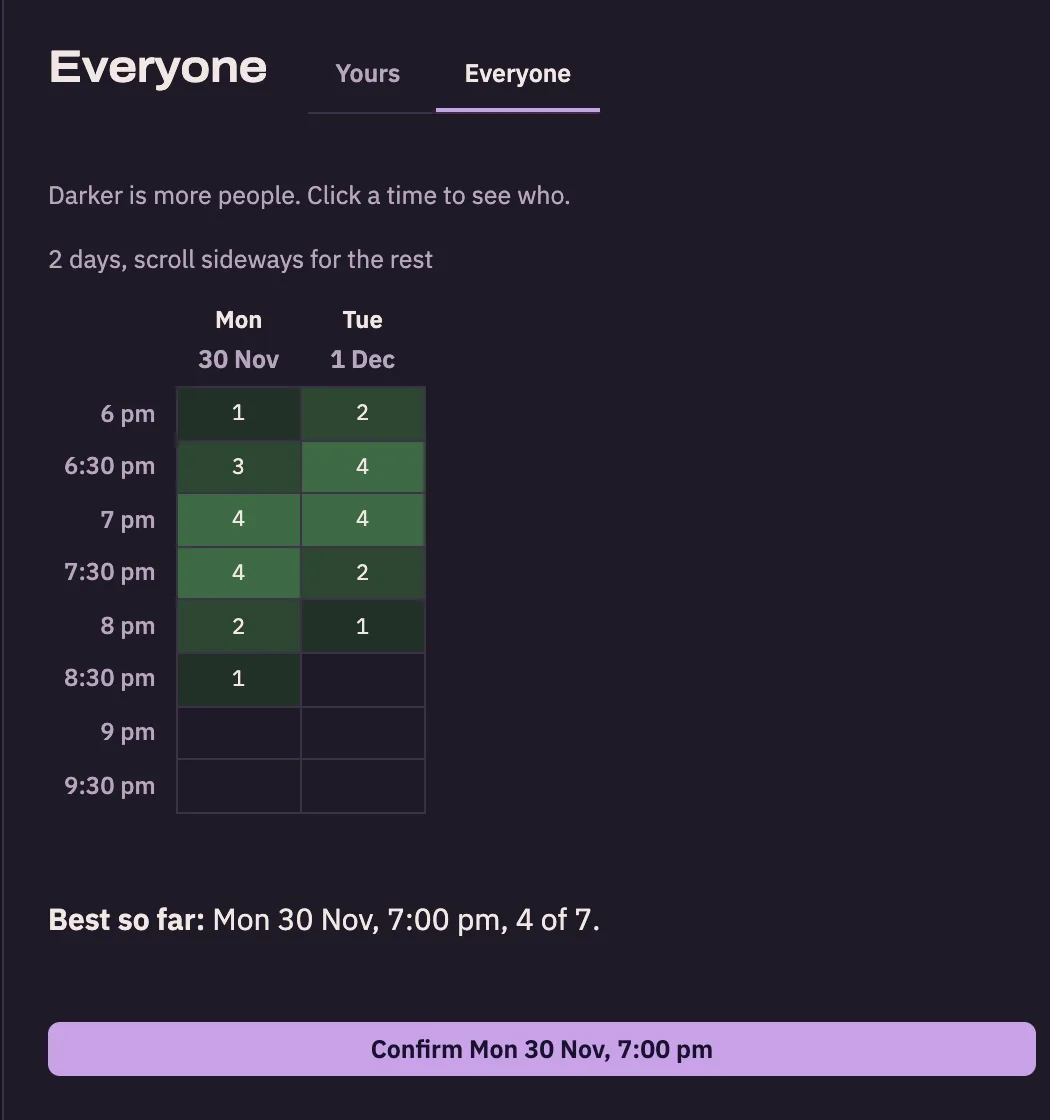
Finding a time across time zones
Someone proposes a window; everyone marks when they are free, in their own time zone. The page shows the best time so far and who has not answered yet, and reminders in Discord chase the people who have not, so nobody has to.
Seeing where the team agrees
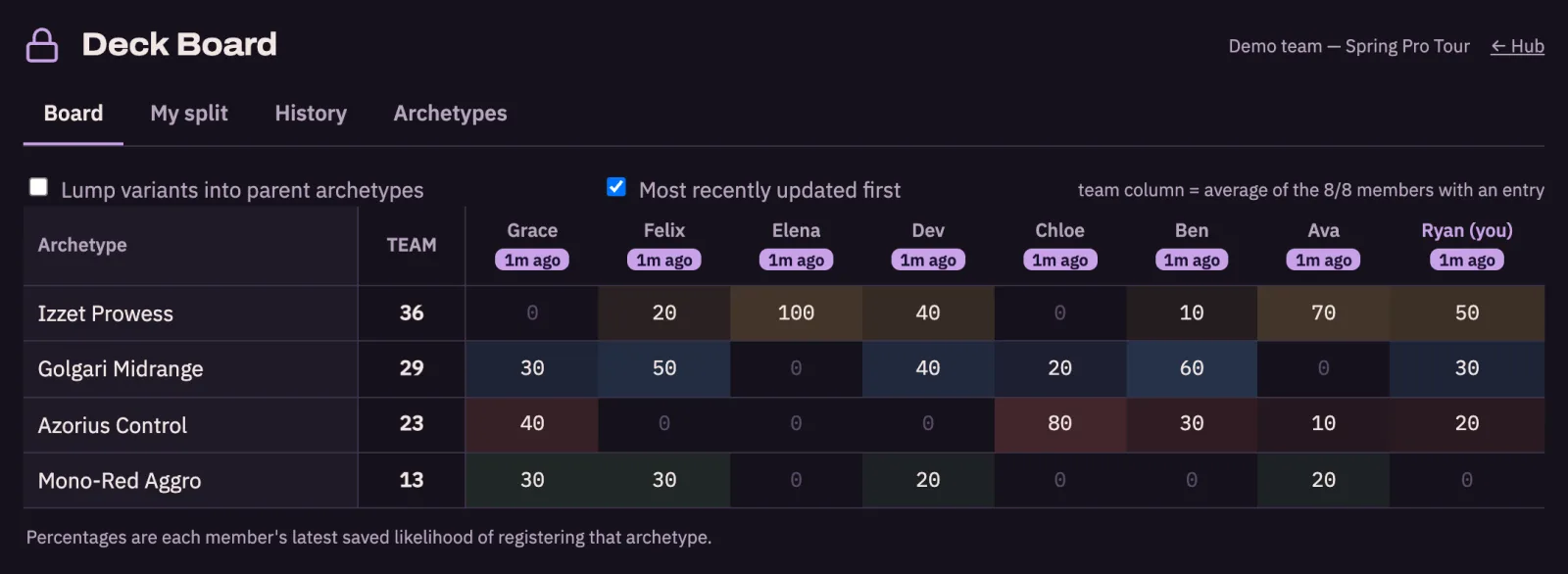
Each player registers one deck for the tournament, and the choice is the biggest decision of the weeks before it. On the Deck Board everyone puts a percentage on each option; the team column averages them, so it is clear at a glance where the team agrees, where it is split, and how that moved as testing went on.
Reading the field from published results
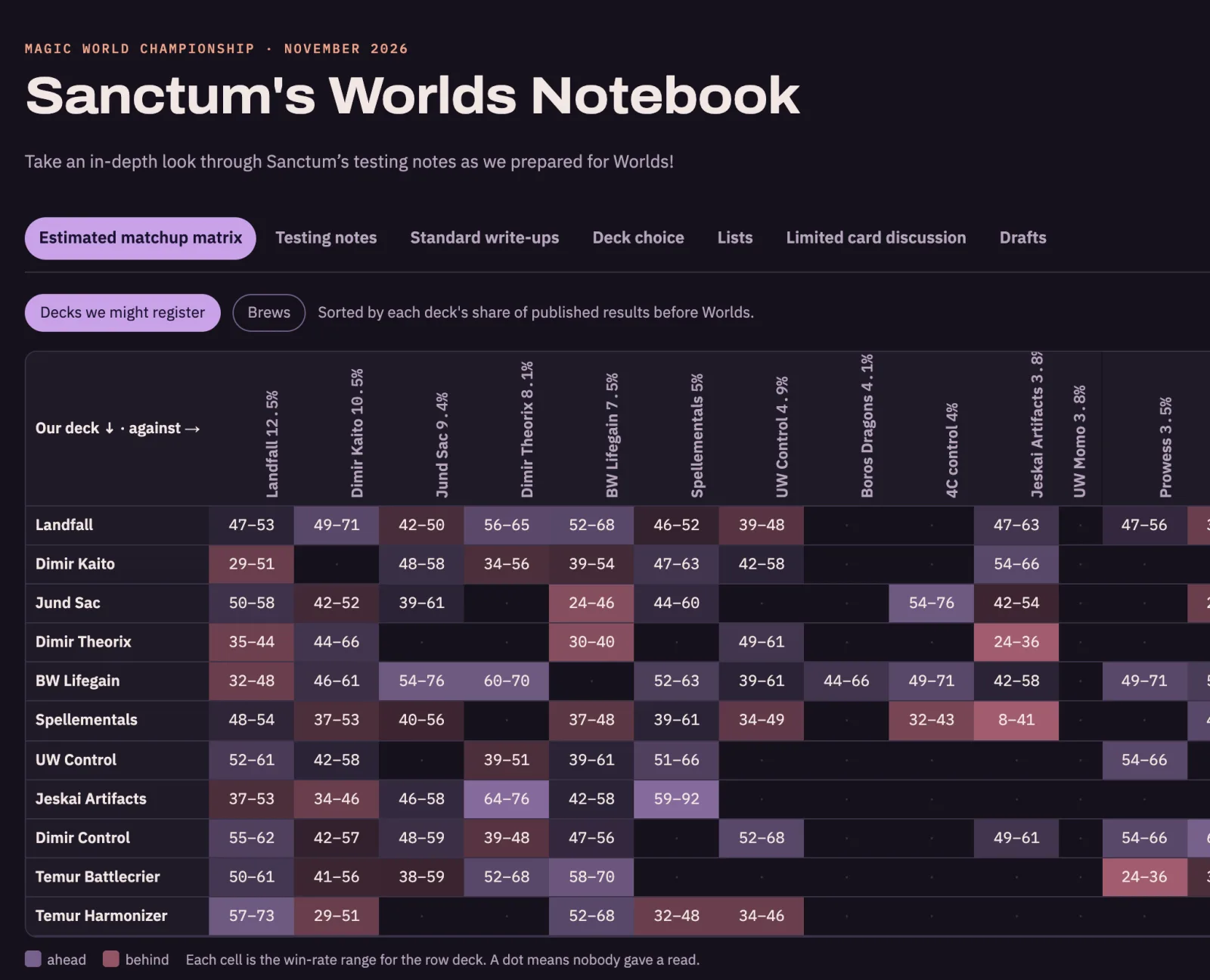
The Metagame board reads published tournament results overnight and groups the decklists by what they actually play, so the team knows how often it will face each opponent. Those shares then order the team's matchup estimates: each cell below is the team's win-rate range for one deck against another, with the most-played opponents first.
It also has a discussion page for every card in a new set, a searchable decklist library with printable plans, and a logistics survey that tracks who still owes an answer.
Why I built it
Before a Pro Tour, a team of players prepares together for weeks: deciding what each person will play, sharing a rented house, meeting to compare notes, and splitting the bills. Most teams run all of that out of a Discord server, where a decision made on Tuesday is buried by Thursday and nobody can find it again.
PT Hub gives each season one place for it. One account follows a player across every season and every tool, and one invite link, pinned once in Discord, brings the whole team in.
How it grew
It started as two separate tools. The Deck Board let everyone record how likely they were to register each deck, and the team used it through a real Pro Tour cycle. Expenses replaced a trip spreadsheet that had broken under its own formulas; I checked it against that spreadsheet to the cent before the team relied on it.
Two tools meant two sign-ups, so I put them under one account and one season. The first version had no accounts at all, just a name and a link. That turned out to be the wrong call: people who opened it on a second device rejoined under a new name and split their own history in two, so I added real accounts.
What went into it
Product
Built around what the team actually struggled with: a broken spreadsheet, a Discord nobody could search. Two tools merged into one when separate sign-ups got in the way, and accounts added when the no-login version split people in two.
Data
An overnight pipeline that collects published tournament results, groups decklists into archetypes by their contents, and turns them into the share of the field each deck holds.
Quantitative
Cost splits weighted by nights stayed and settled in the fewest payments; team averages of everyone's deck leanings; matchup estimates kept as ranges rather than false-precision single numbers.
Automation
Discord reminders that chase whoever has not answered a meeting or survey, and scheduled jobs that keep the data fresh without anyone's laptop being open.
Privacy
A private team tool with a public output: the Worlds notebook replaces every person with a stable pseudonym, checked in several review passes before it went live.
Running it
In use by the team across seasons, so changes ship to real people mid-preparation, and every tool explains itself in plain language instead of needing a walkthrough.
Built with
- Node.js
- Vanilla JS
- Supabase
- Vercel
- GitHub Actions
- Discord API
One public page comes out of it: the team's Worlds 2026 notebook, a season's testing notes published for readers. The tool itself is private to the team, and I'm happy to demo it.